How Does Armed Security Reduce Night Shift Risks in Call Centers?
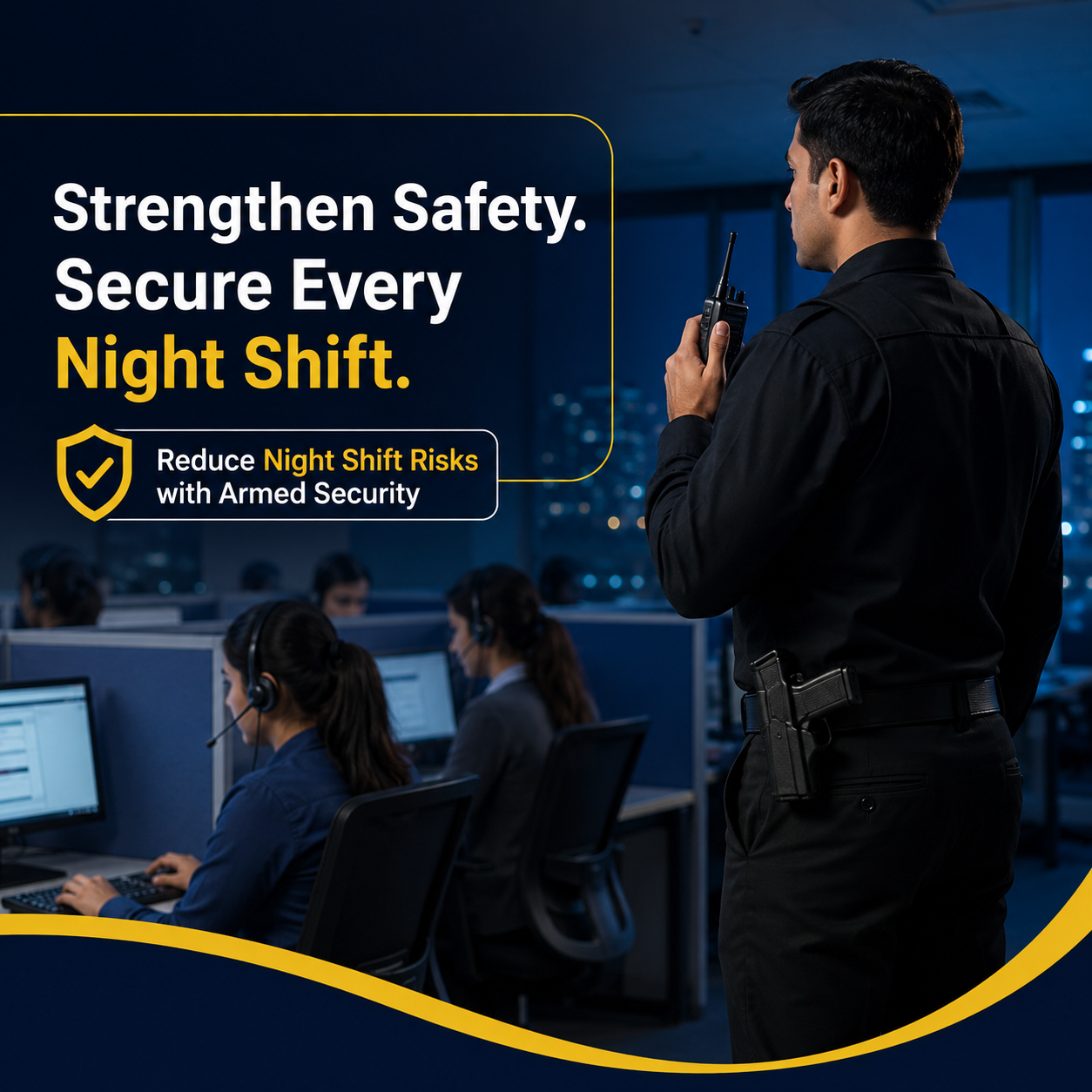
Call centers operating through the night carry a unique set of challenges that daytime businesses rarely face. Reduced staffing, limited foot traffic, and isolated work environments make these facilities more vulnerable to incidents ranging from unauthorized entry to workplace conflicts. Armed security New York professionals play a direct role in keeping these environments safe, stable, and running without interruption. For managers, HR teams, and facility operators responsible for overnight operations, understanding what proper security coverage delivers is key to making smarter protection decisions.
Why Are Night Shifts in Call Centers More Vulnerable?
Night shifts strip away many of the natural deterrents present during business hours. There are fewer people around, supervision is lighter, and response times from external authorities tend to be longer. Call centers often house sensitive customer data, expensive hardware, and a rotating workforce that may include temporary or contract staff unfamiliar with internal protocols. These conditions combine to create real exposure.
Common risks during overnight operations include:
- Unauthorized individuals entering through unsecured access points
- Internal theft of equipment or proprietary data
- Verbal or physical altercations between staff members
- Tailgating into restricted server or data storage areas
- Medical emergencies with no trained responder nearby
- Parking lot incidents affecting employees during shift changes
What Does an Armed Security Guard Actually Do on a Night Shift?
There is a common misconception that armed guards are only useful in high-crime scenarios. In reality, their presence reshapes behavior before any incident begins. An armed security guard in New York professionally stationed at a call center provides a combination of physical deterrence, real-time response capability, and procedural enforcement that unarmed personnel simply cannot replicate.
Key responsibilities typically include:
- Controlling access at entry and exit points throughout the shift
- Conducting regular floor and perimeter patrols at unpredictable intervals
- Monitoring CCTV feeds and flagging anomalies in real time
- De-escalating tense situations before they become physical altercations
- Coordinating with local law enforcement when an incident escalates beyond internal control
- Escorting employees to their vehicles after late-night shifts
How Does Armed Presence Impact Employee Confidence and Retention?
This is a point that many facility managers overlook entirely. When workers feel safe, they perform better, call in less, and stay with the company longer. Night shift employees, who already deal with schedule disruptions and social isolation, respond positively to visible, professional security coverage.
Facilities that invest in trained armed security guard NYC teams often report fewer HR complaints related to safety concerns and a measurable improvement in employee morale. When staff can walk to their cars without anxiety or raise a concern to a trained guard instead of a supervisor, the workplace culture shifts in a productive direction.
What Makes Armed Security Different from Standard Security Options?
Not every security provider offers the same level of protection. Armed guards undergo more rigorous vetting, licensing, and ongoing training than their unarmed counterparts. In New York, the requirements for carrying a firearm while on duty include state-issued permits, background screening, and demonstrated proficiency with the weapon.
Beyond the firearm itself, the training armed professionals receive often covers:
- Conflict resolution and verbal de-escalation techniques
- Emergency first response and basic medical protocols
- Crowd management and evacuation procedures
- Legal boundaries for use of force
- Situational awareness and threat recognition
This broader skill set means the guard is genuinely equipped to handle a wide range of scenarios, not just situations requiring physical intervention.
Which Industries in New York City Rely Most on Armed Night Security?
Call centers are just one part of a broader landscape of industries that depend on overnight security coverage in NYC. Financial processing centers, healthcare facilities, logistics hubs, and data centers share similar vulnerabilities. What they all have in common is continuous operations and high-value assets that require consistent human oversight.
For armed security New York City operations, local knowledge also matters. Understanding neighborhood-specific risks, knowing which entry points are commonly tested by bad actors, and having relationships with local precincts all contribute to a more effective security operation.
Below is a map of New York City to help you visualize service coverage areas for professional security deployments
For call centers with specific compliance requirements, including those handling HIPAA-regulated data or financial records, working with a firm that understands industry-specific risks is a significant advantage. Generalist security firms may provide bodies at a lower upfront cost, but they often lack the familiarity with data access protocols, visitor management systems, or regulatory audit documentation that specialized providers maintain.
When evaluating options, prioritize firms that offer:
- Dedicated account managers rather than rotating contacts
- Documented post-orders tailored to your facility
- Transparent incident reporting and shift logs
- Verifiable licensing records for all deployed guards
- Clear protocols for emergency escalation and law enforcement handoff
How Do Patrol Schedules Affect Overall Risk Reduction?
Consistency is actually a vulnerability. Guards who follow the same route at the same time every hour are easier to anticipate and work around. Professional security teams use randomized patrol intervals combined with checkpoint systems to eliminate predictable patterns. This unpredictability alone significantly raises the effort required for any bad actor to exploit a timing gap.
In facilities with multiple floors or zones, layered patrol coverage ensures that no area goes unwatched for extended periods. Stairwells, server rooms, break rooms, and parking structures are common blind spots that need deliberate coverage planning.
What Should You Expect During the Onboarding Process with a Security Provider?
A reputable armed security provider will not simply place guards at your door and walk away. The onboarding process should include a site walk-through to identify vulnerabilities, a review of your current access control setup, a conversation about your specific risk tolerance and compliance requirements, and the development of a written post-order document that guards reference at the start of every shift.
Ongoing communication between your facility management team and the security firm’s operations center is equally important. Incidents, near-misses, and staff concerns should all feed back into a continuous improvement loop.
Protecting your people and your operations on the night shift is not a passive decision. Whether you manage a single call center floor or an entire multi-site operation, the value of trained, armed professionals who understand your environment is measurable in reduced incidents, higher staff confidence, and uninterrupted business continuity. Connect with a licensed armed security provider serving New York to assess your current setup and build a coverage plan that actually matches the reality of overnight operations.