How Armed Security Guards Differ from Police Officers in Queens: A Complete Guide?
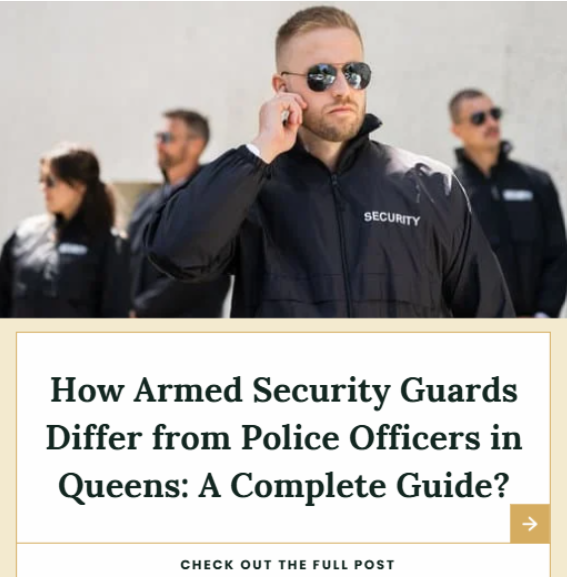
When businesses and residents in Queens need protection, they often wonder about the differences between hiring armed security guard services Queens provides versus relying solely on police officers. While both play crucial roles in maintaining safety, their responsibilities, authority, and methods differ significantly. Understanding these distinctions helps you make informed decisions about your security needs.
Roles and Primary Responsibilities
Daily Duties of Security Guards
Security guards focus primarily on protecting specific properties, assets, or individuals. Their day-to-day responsibilities include monitoring surveillance systems, controlling access to buildings, conducting regular patrols, and maintaining detailed incident reports. Additionally, they often serve as the first line of defense against theft, vandalism, and unauthorized entry.
Most security guards spend considerable time observing and documenting activities. They check identification badges, escort visitors, and ensure safety protocols are followed. During emergencies, security personnel coordinate with emergency services while managing immediate threats to their assigned area.
Police Officer Responsibilities
Police officers, conversely, serve the entire community with broader law enforcement duties. They respond to emergency calls, investigate crimes, conduct traffic stops, and make arrests when necessary. Furthermore, officers patrol neighborhoods, write reports, testify in court, and engage in community policing initiatives.
Their responsibilities extend beyond immediate threat response. Police officers also handle domestic disputes, investigate accidents, serve warrants, and conduct follow-up investigations. These duties require them to work throughout Queens, not just specific locations.
Jurisdiction and Authority Levels
Security Guard Authority
Armed security guard services in Queens operate within limited legal authority. Guards can only exercise their powers on the property they're hired to protect. They possess no special law enforcement authority beyond what any private citizen holds.
Security guards can detain individuals suspected of crimes committed on their property, but only under specific circumstances. This detention must be reasonable and temporary, lasting only until police arrive. Guards cannot pursue suspects off the property they protect.
Police Officer Authority
Police officers possess broad legal authority throughout Queens and New York State. They can make arrests, issue citations, conduct searches with proper warrants, and use force when legally justified. Officers also have the power to investigate crimes, gather evidence, and pursue suspects across jurisdictional boundaries.
This authority comes with significant responsibilities and strict oversight. Constitutional law, departmental policies, and judicial review govern police actions. Officers must document their actions thoroughly and can face legal consequences for exceeding their authority.
Training and Certification Requirements
Security Guard Training
New York State requires security guards to complete specific training before working. Basic security guards need eight hours of pre-assignment training plus sixteen hours of on-the-job training within their first ninety days. Armed guards face additional requirements, including firearms training and regular qualification tests.
The training covers legal powers, emergency procedures, report writing, and communication skills. Armed security personnel must also pass psychological evaluations and background checks. However, this training period is significantly shorter than police academy requirements.
Police Officer Training
Police officers undergo extensive training at certified police academies. The New York Police Department requires recruits to complete approximately six months of intensive training. This comprehensive program covers criminal law, constitutional rights, firearms training, defensive tactics, and community relations.
Following graduation, new officers complete additional field training with experienced partners. Continuing education requirements ensure officers stay current with legal changes, new techniques, and evolving community needs. This ongoing training far exceeds what security guards receive.
Weapons and Equipment Usage
Security Guard Equipment
Armed security guards can carry firearms only after meeting strict state requirements. They must obtain proper licensing, complete firearms training, and demonstrate proficiency regularly. The type of weapons permitted depends on their specific license and employer policies.
Beyond firearms, security guards typically carry communication devices, flashlights, and basic protective equipment. Some may use non-lethal tools like pepper spray or batons, depending on their training and local regulations. Their equipment focus remains on protection and communication rather than law enforcement tools.
Police Equipment
Police officers carry a wider array of equipment, including service weapons, handcuffs, radios, body armor, and less-lethal options like tasers. They also have access to police vehicles equipped with computers, emergency lights, and specialized equipment.
Officers receive training on when and how to use each piece of equipment. Their gear is designed to handle various situations, from routine traffic stops to dangerous criminal apprehensions. This equipment access reflects their broader law enforcement responsibilities.
Response to Emergencies
Security Guard Emergency Response
When emergencies occur, security guards prioritize protecting people and property within their assigned areas. They immediately contact police, fire, or medical services as needed while taking steps to secure the scene and assist those in danger.
Security guards document incidents thoroughly and may detain suspects until police arrive. However, their response is generally limited to their specific property or client. They work to minimize harm while waiting for appropriate emergency services to take control.
Police Emergency Response
Police officers respond to emergencies throughout their patrol areas and beyond when needed. They have the authority to take immediate action, make arrests, secure crime scenes, and coordinate with other emergency services. Officers can also pursue suspects and investigate incidents comprehensively. Their emergency response includes both immediate action and follow-up investigation. Police officers gather evidence, interview witnesses, and build cases for prosecution. This comprehensive approach differs significantly from the more limited security guard response.
Law Enforcement vs. Prevention
Security Focus on Prevention
Armed security guard services in Queens emphasize prevention and deterrence over law enforcement. Their visible presence discourages criminal activity, while their monitoring capabilities help identify potential threats before they escalate.
Security guards use access control, surveillance monitoring, and regular patrols to prevent incidents. They also educate clients about security best practices and recommend improvements to physical security measures. This proactive approach often prevents crimes from occurring.
Police Law Enforcement Role
Police officers balance prevention with active law enforcement. While they engage in community policing and crime prevention programs, their primary role involves enforcing laws and responding to violations after they occur.
Officers investigate crimes, gather evidence, and work with prosecutors to ensure justice. They also conduct proactive patrols and community engagement, but their authority allows them to take direct enforcement action when laws are broken.
Community Interaction and Presence
Security Guard Community Relations
Security guards working in Queens develop relationships with the specific communities they serve. They often know regular visitors, understand local concerns, and provide a familiar presence for employees or residents.
Their interaction style tends to be service-oriented, focusing on helping people while maintaining security. Guards often assist with non-security issues, such as providing directions or basic customer service, which helps build positive relationships within their assigned areas.
Police Community Relations
Police officers engage with the entire Queens community through various programs and initiatives. They participate in community meetings, school visits, and neighborhood watch programs while maintaining law and order throughout their precincts.
Officers balance enforcement duties with community building, working to develop trust and cooperation. Their broader authority and responsibility require them to handle diverse situations while maintaining professional relationships with all community members.
Legal Boundaries and Limitations
Security Guard Legal Limits
Security guards operate within strict legal boundaries that limit their actions to those available to private citizens. They cannot arrest individuals except in cases of felonies committed in their presence or misdemeanors involving breach of peace.
Guards must be careful about detention procedures, use of force, and search authority. Exceeding their legal limits can result in criminal charges and civil liability. Their employers often provide specific policies about when and how to exercise these limited powers.
Police Legal Authority
Police officers possess broader legal authority but face strict constitutional and procedural requirements. They must follow proper procedures for searches, arrests, and use of force while respecting individual rights.
Officers face oversight from multiple sources, including supervisors, internal affairs, and civilian review boards. Violations can result in disciplinary action, criminal charges, and civil lawsuits. This authority comes with significant accountability measures.
Collaboration Between Security Guards and Police
Working Together in Queens
Security guards and police officers frequently collaborate to maintain safety throughout Queens. Guards provide valuable information about incidents on their properties while officers handle law enforcement aspects of investigations.
This partnership proves particularly effective in commercial areas, residential complexes, and special events. Security guards serve as additional eyes and ears for police while handling routine security matters that don't require law enforcement intervention.
Many successful security programs involve regular communication between guards and local police precincts. This cooperation helps ensure seamless responses to incidents and builds trust between private security and public law enforcement.
Information Sharing
Security guards often possess detailed knowledge about their specific areas that proves valuable to police investigations. They maintain logs of incidents, recognize regular patterns, and can quickly identify unusual activities.
Police officers, in turn, provide security guards with information about area crime trends and suspicious individuals. This information sharing helps both groups work more effectively to prevent and respond to criminal activity.
Career Path and Professional Outlook
Security Guard Career Development
Security guards can advance through various career paths, including supervisory roles, specialized positions, or starting their own security companies. Armed security positions typically offer higher pay than unarmed positions.
The security industry continues to grow, with increased demand for professional security services. Guards who pursue additional training and certifications can access better opportunities and higher compensation levels.
Police Career Advancement
Police careers offer structured advancement opportunities through rank progression, specialized units, and leadership positions. Officers can pursue detective work, federal law enforcement, or command positions with corresponding salary increases.
Police careers typically offer better benefits, pension plans, and job security compared to private security positions. However, they also require more extended initial training periods and ongoing education requirements.
Making the Right Choice for Your Security Needs
Understanding these differences helps you determine whether the armed security guard services Queens provides or police protection better serves your specific needs. While police officers offer broader law enforcement authority, security guards provide focused protection for your particular property or assets.
Many businesses and organizations find that professional security services complement police protection rather than replace it. Security guards handle day-to-day security concerns while police officers address law enforcement issues and broader community safety needs.
When choosing security services, consider your specific requirements, budget, and the level of authority needed. Professional security companies can help you assess your needs and recommend appropriate solutions that work within legal boundaries while providing adequate protection.
Frequently Asked Questions (FAQs)
Q1: Can armed security guards in Queens make arrests like police officers?
A1: Armed security guards have limited arrest authority, only for felonies committed in their presence or misdemeanors involving breach of peace on their assigned property. They cannot make arrests with the same broad authority as police officers.
Q2: What training is required for the armed security guard services Queens provides?
A2: Armed security guards must complete basic security training plus additional firearms training, pass background checks, and maintain regular qualification tests. This is significantly less than the police academy training requirements.
Q3: Do security guards have the same legal authority as police officers in emergencies?
A3: No, security guards have limited authority even during emergencies. They can detain suspects and secure scenes, but must wait for police officers to handle law enforcement aspects of emergencies.
Q4: Can armed security guards carry weapons anywhere in Queens like police officers?
A4: Armed security guards can only carry weapons while on duty at their assigned locations and must meet specific licensing requirements. Police officers have broader authority to carry weapons throughout their jurisdiction.
Q5: How do security guards and police officers work together in Queens?
A5: Security guards and police frequently collaborate by sharing information, with guards handling routine security matters while officers handle law enforcement issues. This partnership provides comprehensive coverage for community safety.
