Do Manhattan Office Buildings Really Require More Than One Security Guard?
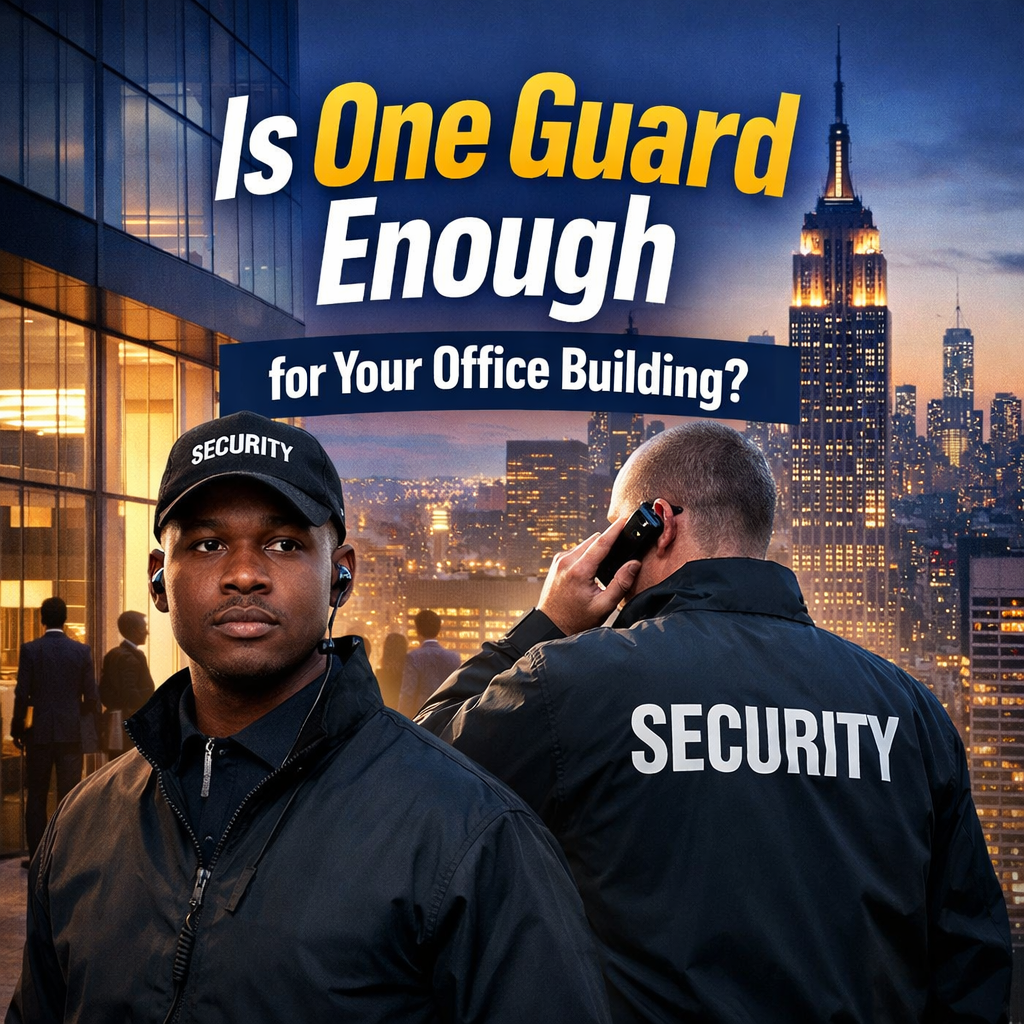
A busy Manhattan office tower, dozens of employees, visitors streaming through the lobby, delivery personnel coming and going and just one guard standing at the front desk. Is that enough? For many building managers and business owners, this question isn't theoretical. It's a real operational and liability concern that deserves a serious answer. Whether you're managing a mid-size commercial property or a high-rise with multiple tenants, understanding what genuine security coverage looks like and when one person simply isn't enough can protect your people, your assets, and your reputation.
What Does a Single Guard Actually Cover?
A single officer handles a lot more than people realize. On a typical shift, one trained professional is responsible for monitoring entry and exit points, verifying visitor credentials, responding to incidents, watching surveillance feeds, and coordinating with building management. That's a wide scope for one person.
In lower-traffic buildings, think a small professional office suite with predictable foot traffic and a single entry one well-placed officer can genuinely hold things down. But the moment you add complexity: multiple floors, side entrances, parking garages, or after-hours activity, the math starts to shift.
When One Guard Isn't Enough?
Here's where building managers often underestimate their exposure. Manhattan office buildings are not generic structures. They come with layered access points, high foot traffic, and diverse tenant populations. A few situations where a single officer is genuinely insufficient:
- Multi-tenant buildings where different companies have different access needs and hours.
- Lobby + loading dock scenarios where two points need simultaneous coverage.
- Buildings with known high-value assets, such as law firms, financial offices, or medical suites.
- Properties with a history of incidents, including theft, trespassing, or unauthorized access.
- After-hours events or late-shift operations that extend beyond standard business hours.
In these cases, relying on one officer isn't just inadequate, it's a liability.
What Trained Officers Bring That Technology Alone Can't?
Many building owners lean on cameras and access control systems, thinking they've covered their bases. And yes, technology is an important layer. But here's what it can't do: make judgment calls, de-escalate a situation in real time, or provide a visible human deterrent that changes behavior before an incident even begins.
Licensed Manhattan security professionals are trained specifically to read environments, identify behavioral cues, and act decisively under pressure. That human element presence, communication, situational awareness is irreplaceable. A camera captures an event. A trained officer prevents one.
The Real Question: Coverage or Compliance?
Many businesses hire one guard because it satisfies a checkbox insurance requirements, building management expectations, or tenant contracts. That's coverage on paper. But a real security strategy asks different questions:
- What are the actual risk points in this building?
- What hours carry the highest vulnerability?
- Is the officer's post positioned for maximum effectiveness?
- Is there a clear escalation protocol when things go wrong?
When you work with a proper security provider, these aren't afterthoughts. They're part of an initial site assessment that shapes the entire deployment strategy.
Lobby-Only vs. Full-Property Coverage
A common deployment mistake is placing the sole officer in the front lobby and assuming it covers the entire building. In reality, Manhattan commercial properties often have:
- Freight elevators with independent access.
- Basement-level utility areas.
- Rooftop access points.
- Parking structures connected to the main building.
No single person can monitor all of these simultaneously. Even with strong surveillance systems in place, you need boots on the ground across multiple zones if the property has multiple access points.
Matching Guard Deployment to Building Type
Not all buildings have the same risk profile, and a smart security plan reflects that. Here's a general way to think about it:
Smaller professional offices: A single, well-trained officer with clear protocols and good camera coverage can be effective. Regular patrol patterns and strict visitor logs matter more than headcount here.
Mid-size commercial buildings: This is where a second officer, or at a minimum a relief rotation, becomes important. Fatigue is real, and a tired officer is a liability.
Large multi-tenant high-rises: Multiple posts, dedicated lobby coverage, patrol officers, and coordination with building management systems are the baseline expectation for security guard Manhattan deployments at this scale.
Choosing the Right Security Partner
The difference between adequate coverage and genuine protection often comes down to who you hire. A vendor that simply fills a post with a warm body isn't the same as a firm that does proper site assessments, trains its personnel on building-specific protocols, and provides supervisory oversight.
Look for firms that employ licensed Manhattan security professionals who understand the pace and complexity of New York City commercial environments. Ask about their vetting process, training standards, incident reporting systems, and how they handle shift transitions. These details tell you far more than a price quote.
Where Is Your Building Located?
If your property sits near a transit hub, a courthouse, or a dense commercial corridor, that context should directly inform how many officers you deploy and where they're stationed. Local knowledge and neighborhood-specific risk awareness are things that experienced security providers bring to the table.
Signs You've Outgrown a Single-Guard Setup
If any of these sound familiar, it's time to reassess your current coverage:
- Incidents are going unreported because the officer was occupied elsewhere.
- Visitors regularly bypass sign-in procedures without being stopped.
- Your officer is regularly pulled away from their post for other building tasks.
- Tenants have raised safety concerns or complained about feeling unmonitored.
- Your building recently added new floors, tenants, or extended operating hours.
These aren't minor operational hiccups. They're warning signs that your current setup has gaps and in a city like Manhattan, gaps get exploited.
If you're serious about protecting your building, your tenants, and your own liability exposure, the answer isn't just hiring "a guard." It's building a coverage strategy that reflects the actual complexity of your property. Connect with a qualified security provider, request a site assessment, and make decisions based on real risk not assumptions. The right team will tell you exactly what your building needs, honestly.
